LlamaRisk
Brand, website, product and design system, 2025 to 2026
Overview
LlamaRisk builds risk infrastructure for decentralized finance. Its work spans risk research, collateral frameworks, stress analysis, live monitoring and automated risk management for protocols operating significant value onchain.
Over more than a year, I led the design across the brand, website, core product surfaces and design system.
The challenge was not simply to give the company a new visual identity. It was to create one coherent system for communicating highly technical risk work, presenting dense financial information and supporting a growing suite of products.
The brief
LlamaRisk needed to mature from a specialist risk team into a company that could communicate with protocols, institutions and financial organizations at the same level of sophistication as the work it performed.
I owned the visual direction across brand and product while working alongside engineering to bring it into production.
That meant solving two related problems. The company needed a clearer identity and stronger position in the market. Its products needed an interface capable of making complex risk information legible without stripping away the detail professionals rely on. The same design language had to work across both.
Guardians of DeFi
I developed the positioning around LlamaRisk as the Guardian of DeFi. The idea gave the company a clearer role. Rather than presenting risk analysis as an abstract service, the identity frames LlamaRisk as the layer continuously watching the systems behind decentralized finance.
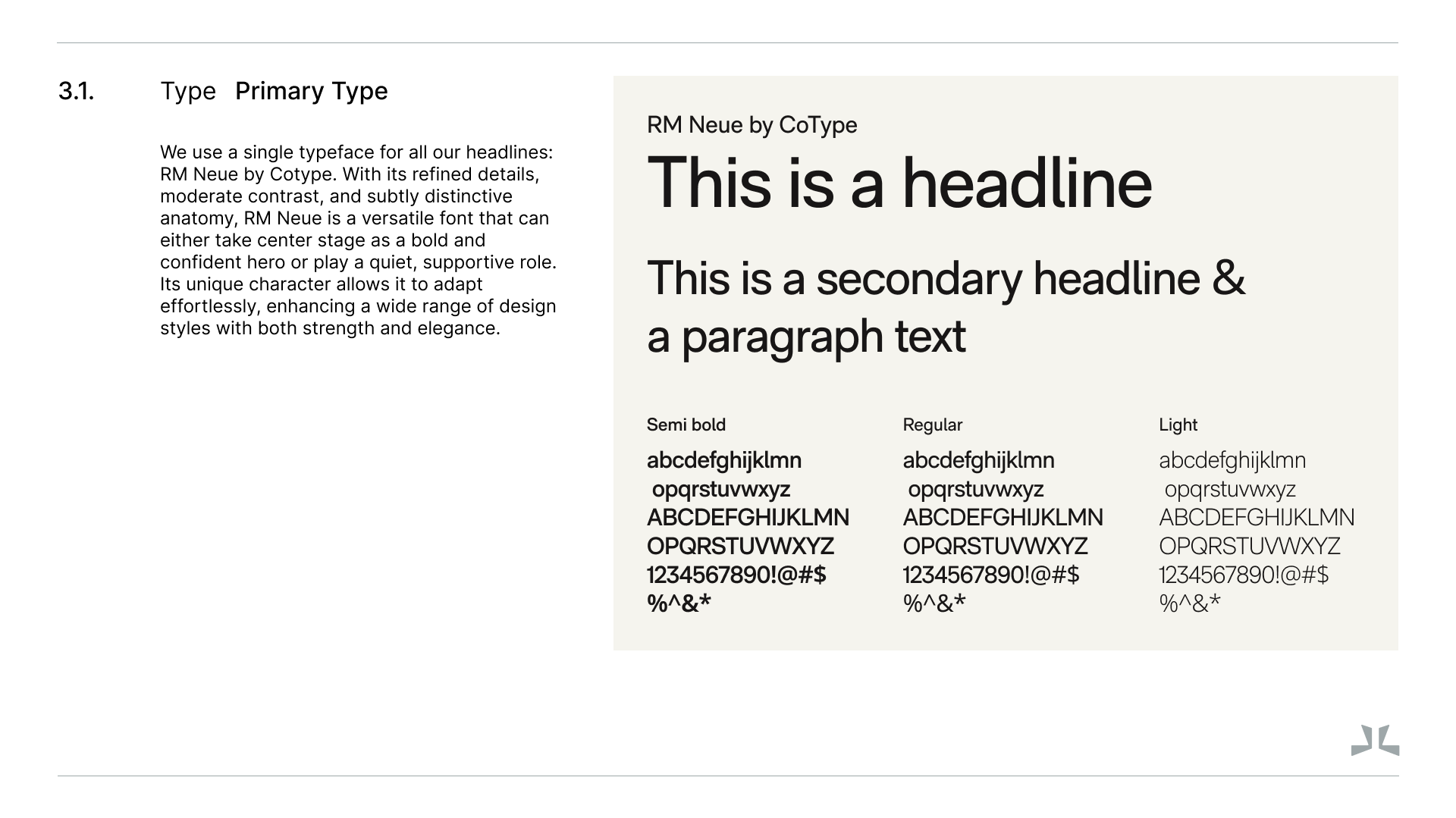
That direction informed the logo, colour, typography, imagery and tone of voice. The visual system is intentionally restrained. It needed to communicate authority and technical depth without falling into the visual language common to consumer crypto products.
Website
The website had several audiences with different levels of familiarity with decentralized finance. Protocols already understood the underlying problems, while institutions and financial organizations often needed more context before the value of the work became clear.
The information architecture therefore had to explain what LlamaRisk does without reducing sophisticated risk work to generic marketing claims. The design leads with the role LlamaRisk plays, then allows individual services, research and products to carry the technical depth underneath it. The goal was clarity first, with detail available when the reader needs it.
Product
The same principle carries into the product interfaces. Risk products contain large amounts of interconnected information. A single screen may need to communicate current health, exposure, valuation, deviations, oracle behaviour, historical events and recommendations. Showing everything with equal weight would make the information harder to use.
I designed the hierarchy around the decisions a user needs to make. Primary status and risk signals are visible immediately. Supporting information sits underneath them and becomes progressively more detailed as the user moves through the interface. This creates a path from overview to investigation without removing the underlying data.
Design system
I built the LlamaRisk design system to support both existing products and new ones without allowing each surface to develop its own visual logic. The components were designed around the information the products actually contain rather than adapted from a generic interface kit.
Typography, colour, spacing, states, data presentation and reusable interface patterns share the same foundation across dashboards, reports and new product surfaces. The system gives engineering a consistent set of building blocks while letting new products inherit the same visual and interaction language.
LlamaGuard Suite
LlamaGuard is LlamaRisk’s automated risk product suite. I designed the suite from the product level, including how the individual products are structured, how their data is presented and how the overall system relates back to LlamaRisk.
The suite is organized into three layers: NAV handles valuation, Proof handles verification and Actions handles automated enforcement. Each solves a different part of the risk management process, but they needed to feel like parts of the same operating system rather than three unrelated tools.
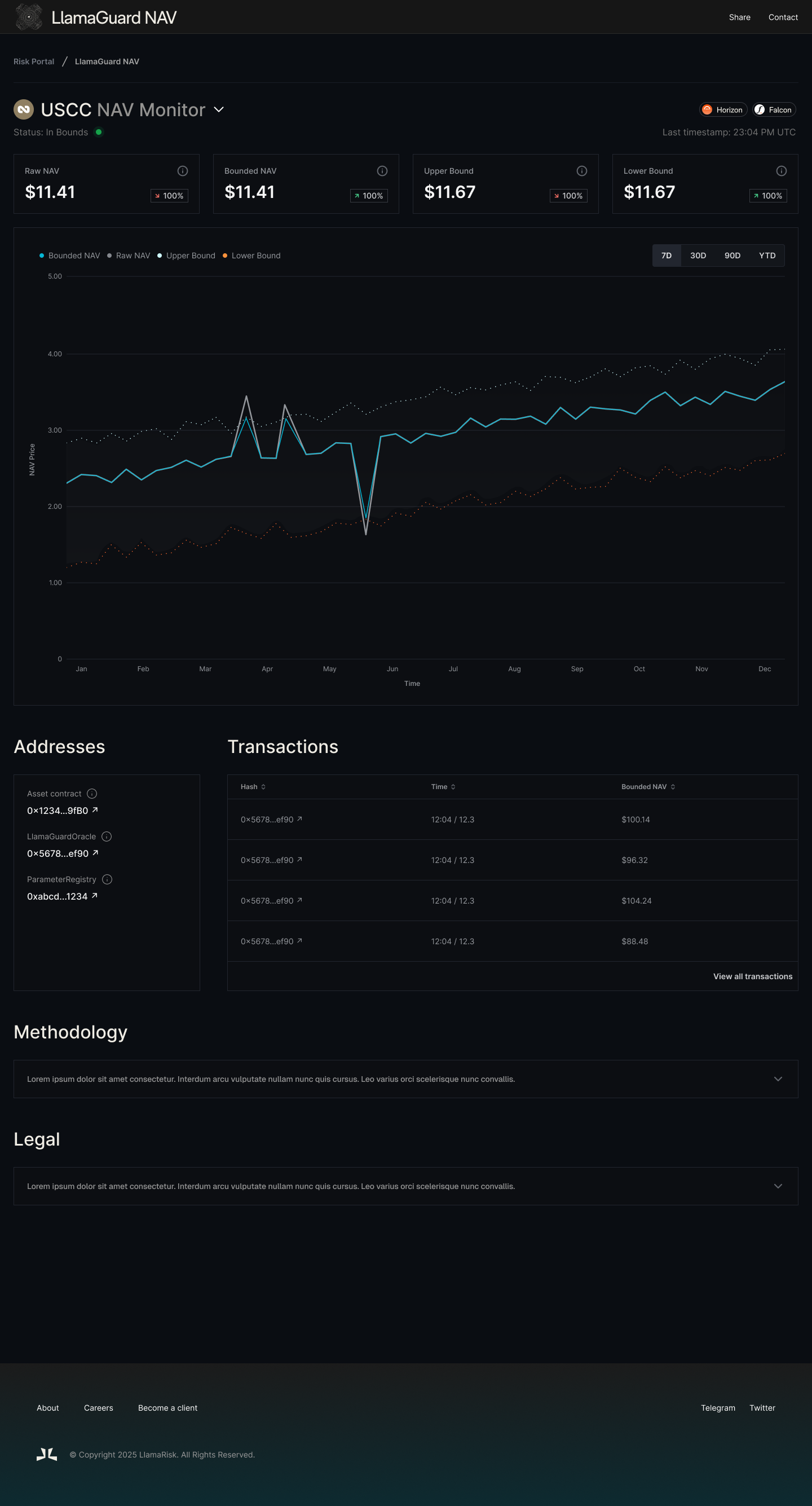
NAV shows this thinking most clearly. The dashboard begins with the information needed to understand the current state of an asset: price, deviation bounds and overall health. From there, the user can move into individual exposures, oracle behaviour and the events behind changes in valuation.
The interface is deliberately layered. A user can understand whether something requires attention without reading the entire system, then move into the evidence behind that signal when necessary. This balance between immediate status and analytical depth became one of the central principles of the product design.
NAV valuation dashboard
Outcome
By the time LlamaRisk entered a larger stage of its growth, the company had one system connecting its positioning, website and products. The identity could represent the company in institutional contexts while the product system gave new tools a consistent foundation to build from.
The work was also in place as LlamaRisk expanded its relationship with Aave and continued developing the LlamaGuard product suite. For me, the project became an exercise in designing one system across very different scales: from a company mark to the structure of a live financial dashboard.
See it at llamarisk.com.